Monday, 2 July 2018

Ph.D. viva: Shagufta Thakor


Today, we have attended Ph.d viva of research scholar Shagufta H. Thakor on the topic "Dalit autobiographies: a critical study of Sharankumar Limbale's Akkarmashi, Omprakash Valmiki's Joothan and Dr. Narendra Jadhav's Outcaste- A memoir.


It was my first experience of attending Ph.D viva and it was really fruitful session for me. It was really very interesting topic and helps to  understand the plight and  it woulb be a step towards the  negotiation of the suffering of Dalit community.

Today we are facing the division of society on the basis of caste system. Specific place are given to Dalit community outside the place of other  upper castes people. To study about Dalit literature is becomes important to uncover the plight.

After the finishing of Ph.D viva there were a series of questions asked by the audience.
There is one question which I have liked the most that "How Muslim community are connected with the Dalit Peoplle"? I get interesting answer by Milan Sir on this question that the food habbits of both the community is same and even both are rejected by the Hind Community. That is really true fact.

The other question which i have liked is about Idealist citizen which was asked by Dilip Barad sir.
However i have not get the satisfactory answer on this question by Shagufta mam.

Overall it was really nice experience to attend this type of research work on Dalit Literature. It arouse inner feeling of doing such work in future and motivates our idea for doing more better research.


Sunday, 1 July 2018

Online discussion: Ideas given by Vargas Llosa


Mario Vargas Llosa has faced an interview for his most recent novel "The Neighborhood".  The interview was taken by Michael Skafidas.

https://www.washingtonpost.com/news/theworldpost/wp/2018/06/27/mario-vargas-llosa/?noredirect=on&utm_term=.cb41559f8666

In this Interview Mario Vargas Llosa has given many best ideas with apt examples.

Here are some ideas which I liked the most:-

i) The Problem of Feminism

Vargas Llosa speaks about the problem of feminism and said that:

"It has become very sectarian, very dogmatic, and I think you have to criticize and oppose these trends. For Example, recently we have had a big group of debate in Spain where feminists attacked Nobokov's "Lolita" which I think one of the greater 20th century novels, they attacked it because they claim the main character is a pedophile. with this criterion, literature will disappear. It is grotesque! If you respect literature you must accept not only the very idealist, altruist vision of human beings but also the infernal vision of them"

ii) Angels and Devils

Georges Bataille said that in human beings, there are angels and devils. Sometimes the angels are important, but for literature, devils are also important too. Literature is the testimony of what we want to hide in the real world.

iii) Sartre's idea

"That words are act and that you write things that could make a difference in history or solve problems. Writing was a way to participate in the creation of a different kind of society, freer, more just, more liberal"
writing was not only for creating pleasure but also a tool for change.

iv) Novelist is the historian of the recorded

History and Literature are faces of a coin. They are so closed and in many cases, the literary version of a historial part prevails over a historian account.


Film screening of "The Great Dictator" By Charlie Chaplin


On 30th june 2018 we have watched "The Great Dictator" by Charlie Chaplin. This was the first film with dialogues by Chaplin. It was released in 1940.


Background

It was the time when the second world war was about to happen. That time Hitler was at the top position in Germany. Charlie Chaplin has taken many sequence as a kind of parody from the  "Triumph of the will" in his film "The Great Dictator". "Triumph of the Will" is the Natzi Prapaganda film.
Charlie Chaplin and Hitler-
Both have Same year and month of birth- April 1889, same physical appearance, same popularity. But the only difference is that one makes people weep whereas the other makes people laugh.


Double role: opposite in nature

Charlie Chaplin Played double role in this film. The one is Hynkle the Dictator and the second one is Jewish Barber in the Ghetto. Both the characters are totally opposite in nature. At one side Barber is innocent and compassionate whereas Hynkle is cruel and arrogant ruler.


Reflection of Modern Age in the film

i) Surreal effect


Means real but in a awkward way. In the film when the plane of captain Schultz was flying along with the Barber and the captain himself then suddenly it turned down but still Both Jewish Barber and Captain remain in the sitting position without any effect this seems real but was only produced the surreal effect.

ii) Technology

In  the film there is huge machines used in wars to throw out Bombs, Bullets etc. This shows the huge development of machines in the modern era. Even their is scene of Radio also which cast the show Happy hours, but symbolically it indicates the sad hours.

iii) Pacifistic view

In the film the character of the Jewish Barber shows the pacifistic view towards war. he never wants any kind of war. Even when he misunderstood as the dictator Hynkle and supposed to give speech on the victory over the Osterlich. HE simply gives very effective speech about he destruction of the wars. He says that he never wants to rule the world. His motive is only to live happily and with democracy. He believes in equality.

iv) Esoteric

Esoteric is the key term in the modern age. It means only few learned scholar can understood, not understood by all. We find the esoteric view when The Dictator hynkle giving the speech. He speaks Gibberish language which was not understood by all the peoples. But still peoples behave like that they understood each and every thing.

v) Human rights

The basic human rights of equality, freedom was shown in this film. The Jewish people are not getting the equality by the people who are in rule. All the police man used to tortured the Jews and behaves with cruelty. Even the right of freedom to live anywhere is snatched by those cruel rulers. The Jewish are not free to live happily anywhere. By being disturbed by the ruling power the Jewish decided to go somewhere where they can find peace. They all settled in the peace country Osterlich. But Hynle couldnt tolerate it and he signed the treaty with the Napaloni and coquered the victory over that land also. In this way the human rights are exploited has been shown in this film.

vi) Intellectual dictorial

Intellectual dictorial is bad because  arrogance came in every talk just like The Dictator Hynkle did.


Others Importanct scenes in the film

i) Satire on artificial boundary

The boundaries which was made by the humans are artificial. In the war  the Jewish Barber accidently crosses the boundary becomes in fog he was unable to notice or follow his fellow soldiers.

One writer Jamal Ahmed writes in his short story about a girl named Gul that how she accidentaly crosses the border and was killed.

ii) Stategy of Political leaders for giving speech

It was becomes the common strategy to connect the audience emotional in the name of nationalism. Hence this strategy is also used by the great Dictator Hynkle who becomes emotional in the end of the speech when the feeling of patriotism came. In this way the audience were easily emotionally fooled by the leaders.

iii) Satire on Typewriters

There was one scene when Hynkle was speaking and the girl was typing. He speaks single word and the girl typed too much, but when he speaks too much the girl typed only one.
This was the satire on the translaters of the political leaders who knows everything what the leaders are supposed to speak and therefore the speech was already made by them before they speak any thing.

iv) Red Carpet

There was one bad tradition that whenever any great leader arrives, they had to put the red carpet on the ground. When Napalini arrives in tromainia, Hynkle welcomes him in the same manner.

v) Children and the leaders

There was always a connection between the political leaders and the Children. In the film also we can find that after the victory how childrens are welcoming the dictator Hynkle and Hynkel also shows his great affection towards the children.

In India aslo the name of the polical Leader Jawaharlal Nehru came as chacha nehru for the children and even at his birth date children day was celebrated.

vi) Playing with the balloon of globe


In the film there was one scene  when the Hynkle was dreming about ruling the world and in that feeling he started playing with  the balloon of globe. This shows how the  leader have too much Pride and plays with the feellings of the countrymen.


Conclusion

In this way the film presents the condition of the modern age. And how the countrymen are suffering with the hazard of the war. How the spoiled leader controlling the weaker community and misusing their power. This film remains the great representative of the times and the last speech by the Jewish Barber remains the worthy speech till the present time.


Friday, 29 June 2018

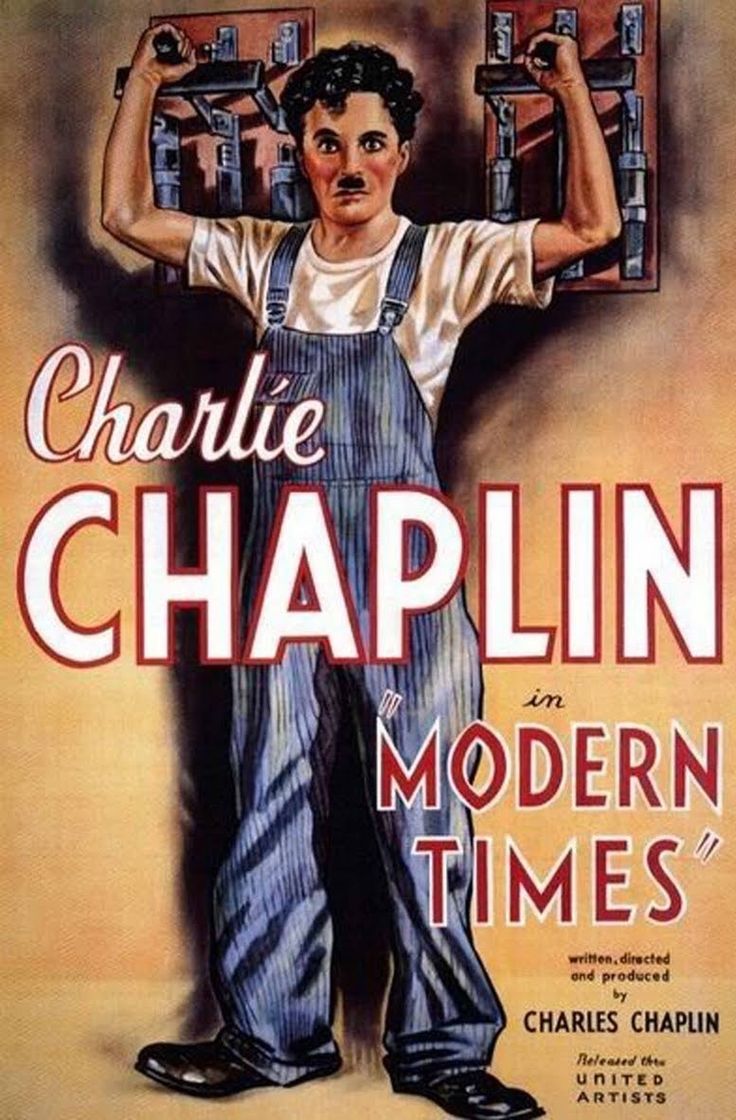
Film Screening of "Modern times" by Charlie Chaplin


On 29 june 2018 at our department we have watched the movie "Modern Times" By Charlie Chaplin. He himself directed, produced and acted in this film.


About the Modern age

The whole film shows the vast development of huge machines and how the life of people was ruined by the machines. It reflects the modern age and all  its advantages and disadvantages.

The workers are working in Assembly line and they are controlled by various mechanic tools. The head of the factory used camera to keep eye on the activities of worker. He didnot even left them alone in washroom. he everywhere fits the camera and govern the workers. The workers are suppposed to work with the speed of machines. When the factory master increases the speed of machines then it becomes difficult for the workers to keeping pace with the machines.

Poor situation of unemployed people

When the factory closed all the workers becomes jobless. They come on road and raise their voice for  job. But there is no one to hear their painful voices.

Symbol of Red Flag

The red flag is used to raised voice against the present government who is responsible for the unemplyment of the masses. In this film Mistakenly Chaplin took that flag and was suspects by the police as going against the law and therefore imprisoned.

Another Paraller story of poor girl

In this film another story of a poor girl is also going on. She search for food and wherever she find food, steals it. she  is living with her father and two younger brother sister. One day in crowd accidently her father was shoot out by the Police ans she becomes orphan. That time the orphans are supposed to live in orphanage. But She runs away from there. somehow her situation is same as the main protagonist Charlie Chaplin and therefore both met each other by the chances of fate.

Basic requirements

For human the first priority is "Roti, Kapda aur Makan" then only they can think of other luxurious items. Therefore in this film also the actor goes on searching for job to get food, shelter and clothes.

Advantage of bonafide


The actor get the bonafied from his previous factory, and it becomes his advantage and easy to get any job. In that bonafide their honesty was incarved. However in present time it will not work.

Surreal image

The film also shows the surreal image. First in the factory when Charlie was engaged in work and lost his mind and go inside the machines. The scene was obviously unbelievable. Second time also when Charlie get job at another factory mistakenly he made his boss to go inside the huge machines.
The irony is that when there is Lunch time then all workers stop their work in middle and went on to tale lunch because they will not get one minute more. The machines also stop working.

The food feeding machine

The industry makes the workers so busy that even it will not give them enough time to eat. The food feeding machine came in factory to experiment with one of the worker and hence Chaplin was selected for that task. But somehow this machine malfuntioned and was not get permission by the head to come in market.

White Powder

In this film there is small incident which shows that in modern time some people are also addicted to drug. One man was habituated to take white powder which seems similar to salt, therefore when Police came in search of him, he put all the powder into the salt bar.

Conclusion

In this way the films shows the various things which indicated the modern times. In the last there is happy ending, an end with hope then things must be go well from tomorrow. It was the scene of dawn. Means totally different from the the starting scene. At the last the character are going towards nature.


Wednesday, 27 June 2018

Field work: Assembly line and its effect


Assembly line 


The term assembly line was included in mass production. It is also called Progressive assembly. It is a manufacturing process in which parts are added from workstation to workstation until the final assembly or final product produced. Things are produced automatically with the help of huge machines in a very drastic manner.

Let us discuss one story with reference to Assembly line

Quality by John Galsworthy

Quality is a story about an honest shoe maker Mr. Gessler. He is dedicated to his work and spent all his time working whenever he received any order of making boots. When he was in work, he never worry about sleep and food. He has high moral value as an artist. He thinks that it was his duty to make best and to give satisfaction with his product to the consumer. He believes in Quality product. He never think of making more porfit with his work. To achieve more profit is not his goal. He is different from the other craftsman who never allow their customer to question them. Mr. Gessler easily accept his fault and tried his best to fix it. If customer come with dissatisfaction then he politely take it and convince customer to make it best.

When the bigger shop came in competition Mr. Gessler never gave up. He made boots to comfort the customer. As an artist he show respect to his art and never loses the quality of product just to compete with bigger Shops.

Death of Craftsmanship

Now a days with the formation of Assembly lines, death of Craftsman occur. The huge machines are destroying the soul of craft. In this way Craftman's pride is vanishing.

Interview with shoemaker


Normally we has asked three questions whose answer is totally different as per our expectation.

Questions are:-
1. After the influence of competitive shoe making industry, which type of change come in their business?
2. Are you believes in making Quality product or Profit making product?
3. Would you believe that after Industry there comes the death of Craftsmanship?

The First shoe maker


The first shoe maker is old person. He is running his business since 20 Years. He is very porud about his quality materials. He says that Industrial development never affect his shop. He is getting same profit as he used to get. He never faces any change.
As we dont know that he is lying or not just to hide his poverty. He didnt want to show his bad condition to us. Thats why he only speeks goody goody things. There we find self respect in him that he never like himslef to be presented as piet. 
He says one good thing that the customers who used to buy shoes from his shop earlier are still buying, because he makes his customer satisfied. 
He was even in support of our Prime Minister Narendra Modi and said that in his rule there would be no worries and problem to them.
We are not getting him clearly anyway.


The second Tradesman


He is quiet young and running his shop since six months. He very politely gave all the answers of our questions. 
He also didnot hesitate to give his name, whereas the first one say no clearly to give name. 
When we ask him about his shop that whether he is getting more profil or less after the competitive industry. He replied that he is facing 10% loss. He didnt get that much profit. We have asked him that whether he is doing anything or not to compete with Machine made Boots, he clearly says no. But one thing he says that he is putting his products on sale to attract more and more consumers. 

He also says that his focus was on Profit not on quality product. 

Difference

Here we find difference in the thinking of Shoemaker and Tradesman and their way of dealing with customers. Here is the reverse situation or we can say that truth remains hidden. 

Conclusion 

So the conclusion is with the developing assembly lines still some craftsman spirit was not dead. still there are peoples who value the handmade craft rather than machine made final product. If there is no change in the quality product of things then there must be no bad effect. 
Therefore in  Modern times the situation that england is facing dur to the development of Industries is still not compared fully with our country. 

But still handmade things are limited. It couldn't made mass production in short span of time. It need more time whereas Machines needs less hour and can made more products. Therefore it can deals with the increasing demand of the consumers day by day.


ELT Task: Bilingualism, Trilingualism, Multilingualism

ELT Task

Translation of phrase into different languages in terms of Bilingualism (speaking two language with equal fluency), Trilingualism (speaking three language with equal fluency) and Multilingulaism (speaking more than one language either by individual or by community)


Phrase:- You are beautiful

DUTCH- Je bent mooi


ARABIC-  'ant jamila


NEPALI-  timi ramro chho


NORWEGIAN-  du er vakker


SPANISH- eres hermola


Here we find that there are different words used for single phrase acording to various nation. Even the beauty of various nation is also different and have different parameters.

Sunday, 24 June 2018

Age of Chaucer- 14th century


Background of the age

1. Transition and Turbulance

The age of Chaucer is the age of transition and turbulance. It covers the period of 1340-1400.

2. Hundred year  war

It was the series of war between France and England.

The hundred year war was divided into three phases:-

i)Edwardian Era (1337-1360)
ii)Caroline war
iii)Lancastrian war (1415-1429)

3. Growth of Trade and Commerce

The economy was overwhelmingly agricultural.

4. The Black Death

The black death was the devastating pandeman in human history. It killed more that four million people. It was caused by the bacteriam Yersinia pestis that circulates among wild rodent.

5.Power of Church

The Church was the most powerful institution and owned a third of the property. it owned about 75% of English Land

6. The Peasant Revolt

It was began in 1381. The cause of the peasant revolt is uprising third poll tax. On 7th june 1381 Wat tyler joined the uprising in maidstone.

7. Alliterative revival

Alliterative poetry culminated in the major masterpiece of :-
Sir Gawain, Green knight, Pearl and pierce plowman( william langland)

Important Romances in the age of Chaucer

i) The Tale Of Gamelyn-1350)
ii)William and the Werewolf
iii)Sir Gawain and the Green Knight


Short Intro of these three Romances

I) The Tale of Gamelyn

It is the story of the younger son, left at his fathers's death in the care of his wicked elder brother, who seeks to cheat him out of his inheritance. The Father of three son Sir John Boundys divides all his land and gives five ploughland to the eldest son, five more to the second, and all that remain to the share of Gamelyn.

II) William and the werewolf

This is the retelling of the much older Roman de Guillaime de Palerne. This is the first work of fiction to feature a benevolent werewolf.

III) Sir Gawain and the Green Knight

The frame of the narrative was surrounded by the Morgan le Faye's traditional hatred for Arthur and his court, valled Camelot.

Important religious writing in the age of Chaucer

i)Ayenbite of Inwyt
ii)Prickle of conscience
iii)Revelations of divine love
iv)Religious pieces of Poetry
v)The Pearl

Short intro of The Pearl( Elegy)

It is an elegy in about 1200 lines.It is written in the form of dream vision. In this poem the narrator is wanders through a garden containing the grave of his infant daughter. He has a vision of Paradise lying beyond a river and recognize the adult woman seated there as his adult daughter. As she scolds him for his extended grief, she describes his present situation married to the lord of heaven.

Most notable Ballads of the age
i) Robin Hood Ballad
ii) Chevy Chase
iii) Sir Patrick Sspens
iv)The Nutbrown maid

The Pearl Poet

The Peal poet is the name given to the author of pearl, an alliterative poem written in 14th century. The pearl poets remain unidentified. The Pearl or the Gawain wrote in the ancient alliterative Tradition of Old English narrative poetry.

Major works of Pearl Poet
i) The Pearl
ii) Cleanness
iii) Patience
iv) Sir Gawain and the Green Knight

Geoffrey Chaucer

Chaucer was born about 1343 to 1400 in the Vintry. His father was a prosperous wine merchant. When Chaucer was taken to prisoner then the English Prince Edward III paid a ransom for his release.Edward III sent him to the diplomatic missions to France, Geneo and Florence. His travels exposed him to the work of authors such as Dante, Boccaccio and Froissart.
Chaucer married to Philippa de roet, daughter of the Flemish Sir Gilles De roet around 1369.

Three periods of Chaucer's life

i)First Period(French Period)
     -The Book of Duchess
     -Translation of the Roman de la Rose

ii)Second period(Italian Period)
   -The House of Fame
   -The Parliament of fowls
   -Translation of Bothius' de Consolation.

iii)Third period(English period)
    -The Legend of the good women
    -Canterburry Tales


Short intro about the works

I) The Book of the Duchess

In 1369 Chaucer was asked by John of Gaunt to compose a memorial poem, written in English, to be recited at the mass for his deceased wife  Blanche, Duchess of Lancaster. The result was Chaucer's first work, The Book of the Duchess. It is written in the form of dream allegory. The poem begins with the Sleepless poet who reads a story about Ceyx and Alcione and wanders around in his thought. He falls asleep and dreams a beautiful story. He sees a man in blak, a knight who tells him about his courtship pf a beautiful lady and his mourning for her death.

II) The House of Fame

It is an autobiographical poem written in the form of dream allegory. It is composed in three books,

Book I begins with the narrator falling asleep and dreaming about a temple dedicated to the Goddess venus. Inside the temple, he finds inscriptions that depict the story of Virgil's Aeneid.

Book II- The narrator was carried out by an Eagle, which speaks to him in human voice and assures him that Jove has decided to reward him by sending him to the House of Fame.

Book III- In this book he reaches the house of fame and meets the Goddess of fame


III)  The Parliament of Fowl

It is written to celebrate the marriage of King Richard II to Anne Bohemia in 1382. It is also written in dream vision. It relies upon the beast fable tradition. It presents a vision of birds gathered to choose their mates on St. Valentine's Day. The birds conduct a debate about hoe to choose a mate. While the debate remains unresolved.

IV) Troilus and Criseyde

Longest poem about 8000 lines. The poem is about tragic love affair of a Trojan Prince, Troilus and a young beautiful Widow Criseyde. Criseyde id]s both beautiful and mysterious and also a practical woman who thinks before she acts. Troilus is a brave warrior. He is emotional and reticent.

V) The Legend of Good Women

It is also written in dream vision and it contains of Prologue and nine stories. It recounts the stories of women from history  and myth who were martyrs to love such as Dido, Thisbe, Medea, Cleopatra, Hypsipyle, Ariadne, Lucrece, Phillis, Philomela and Hypermnestra.

VI) The Canterbury Tales

It is a collection of stories written narrated by 29 pilgrims. All the pilgrims gather at Tabard inn.

Pilgrims in the Canterbury tales

a)The Knight
b)The Squire
c)The Yeoman
d)The Prioress
d)The Monk
e)The Friar
f)The Merchant
g)The Clerk of Merchant
h)Seargent of law
i)The Franklin
j)The Guildesmen
k)The Cook
l)The Shipman
m)The Doctor
n)The wife of Bath
o)The Parson
p)The Plowman
q)The Miller
r)The Manciple
s)The Reeve
t)The Summoner
u)The Pardoner


William Langland

He born in Ledbury, Herefordshire in about 1332. he had a deep knowledge of medieval theology and was fully committed to all the implications of Christian doctrine.

His famous work Piers the Plowman

Its full title is The vision of William concerning Piers the Plowman. It is an allegorical poem. The lead character, Piers is a hardworking, sincere and honest Plowman. The poem describes his spiritual quest and it consistes of three dream vision.

John Gower

Gower was the personal friend of Chaucer.

"Gower was a more typical representative than Chaucer could claim to be"
                                          -David Daiches
His works
a)Speculum Meditantis
b)Vox Clamantis
c)Confessio Amantis
d)In Praise of Peace

John Mandeville

Work- The  Travel of Sir John Mandeville

John Wycliffe

He was described as the morning star of the Reformation.
He is known for his first complete translation of Bible into English. He born in Yorkshire village which gave him the surname.

His works

a)The Truth of the Sacred Scriptures
b)The Pope's Power
c)Apostacy
d)On the Eucharist
e)Trialogue

Lolard Movement

Lollardy was the medieval reform movement based on the writings and teachings of the Oxford University theologian, John Wycliffe. Wycliffe's followers were known as  The Lollards.
The lollard's not only attacked many belief's and practices of the Church, but also demanded social reforms.

Reference

Arihant Publication for UGC NET/SET